10 team double elimination bracket: what you get
This 10 team double elimination bracket creates a 16-slot draw with 6 automatic byes. A standard single-final schedule has 18 matches; add one only when your rules use a bracket-reset final.
- 10 seeded entrants
- 6 automatic byes
- Connected lower bracket
- 18-match standard schedule
- PNG, PDF and public sharing
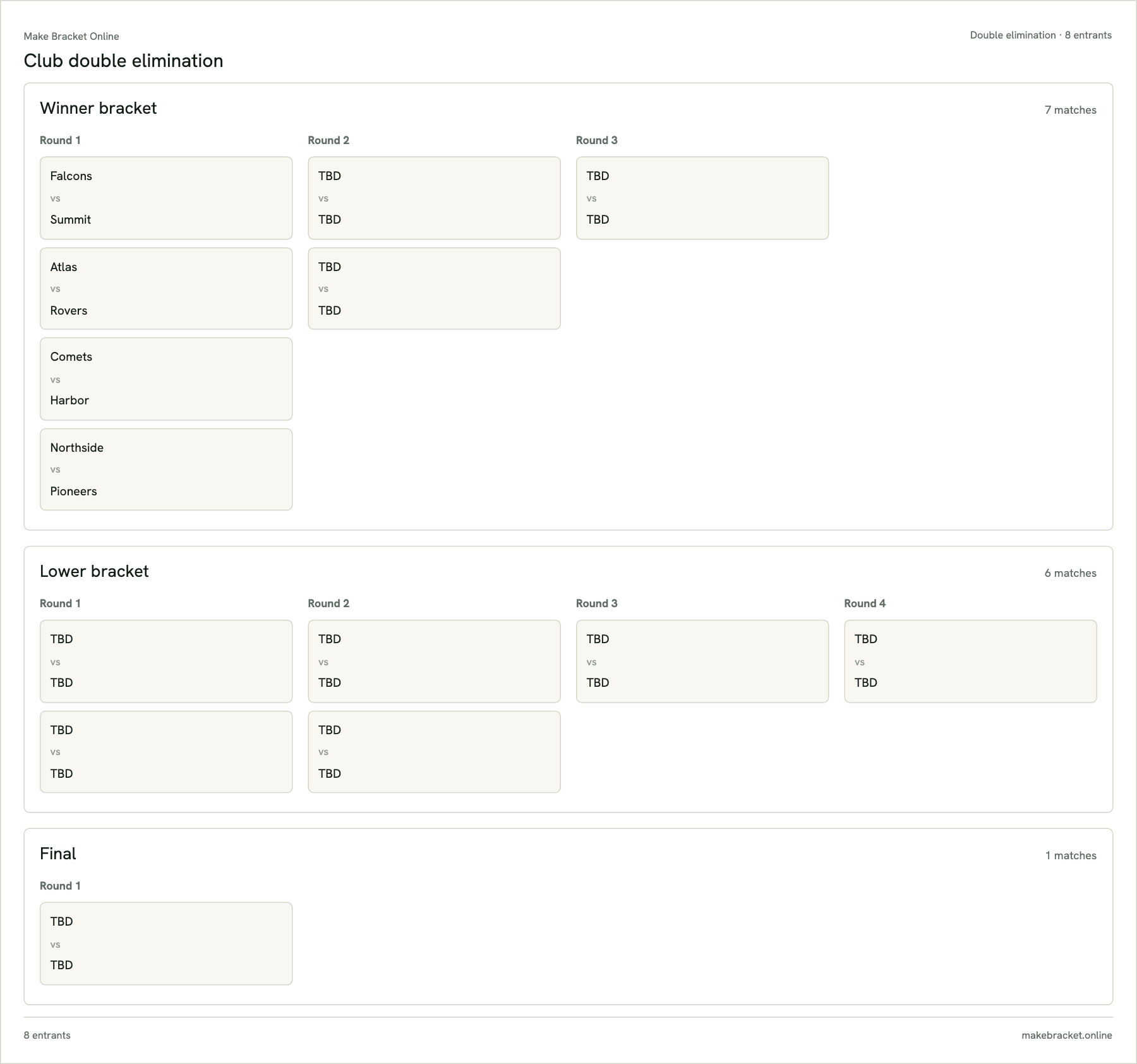
10 team double elimination bracket: byes before play starts
10 entrants do not fit directly into a 16-slot opening. The 6 unused slots are automatic advances, so the seed order matters before the first real match begins. Publishing that order prevents a bye from looking like an unexplained score.
Keep the list seeded when previous results should reward stronger entrants. For a casual event, shuffle the field once, record the draw, and use that visible order throughout the winners and lower brackets.
- 10 real entrants
- 16 opening slots
- 6 automatic byes
- 18 matches with one grand final
How loser routing works in a 10 team double elimination bracket
The winners path behaves like a normal knockout draw. After a first loss, the affected entrant moves to its defined lower-bracket match rather than leaving the tournament or needing a manual redraw. A second loss eliminates that entrant.
The finalist from the winners side has not lost yet. This page uses a single grand final for its standard match count. If your event requires the lower-bracket finalist to beat that team twice, reserve time for a possible reset match and state the rule before anyone plays.
Plan the 18-match 10 team double elimination schedule
The standard schedule contains 18 matches: 2N-2 for N = 10. That is 9 more matches than a single-elimination field of the same size, in exchange for every entrant surviving one loss.
Schedule lower-bracket rounds with realistic recovery time. A player dropping from the winners side may otherwise be called again before the result has even been communicated, which makes a technically correct bracket feel unfair in practice.
10-team double elimination format reference
The opening bracket size is about the next valid power of two; the actual match count depends on real entrants, not empty bye slots.
| Entrants | Opening slots | Byes | Standard matches | Reset maximum |
|---|---|---|---|---|
| 10 | 16 | 6 | 18 | 19 |
| 4 | 4 | 0 | 6 | 7 |
| 8 | 8 | 0 | 14 | 15 |
10-team bracket checklist
Confirm the concrete details that cause most small double-elimination events to go off course.
- 1
Seed order. Publish the 10 entrants before the first match so the 6 byes are explainable.
- 2
Grand final. Choose a single final or a reset final and reserve the extra slot only when the reset rule applies.
- 3
Lower route. Use the connected lower bracket instead of copying names into a spreadsheet after each first loss.
- 4
Rest time. Add a buffer between a lower-bracket match and its next possible opponent.
- 5
Sharing. Give players the read-only page and retain the private host link for score entry.
10 team double elimination bracket frequently asked questions
How many matches are in a 10 team double elimination bracket?
With one grand final, it has 18 matches. A reset-final rule can add one more, for a maximum of 19.
How many byes does a 10 team double elimination bracket need?
It uses a 16-slot opening layout, so 6 slots become automatic byes. They are advances, not scored games.
What happens after a team loses once?
The team is routed to the appropriate lower-bracket match. It is eliminated only after a second loss.
Can I edit this bracket and share it?
Yes. Replace the seeded names, record results from the host link, then share the public view or download a PNG or PDF.